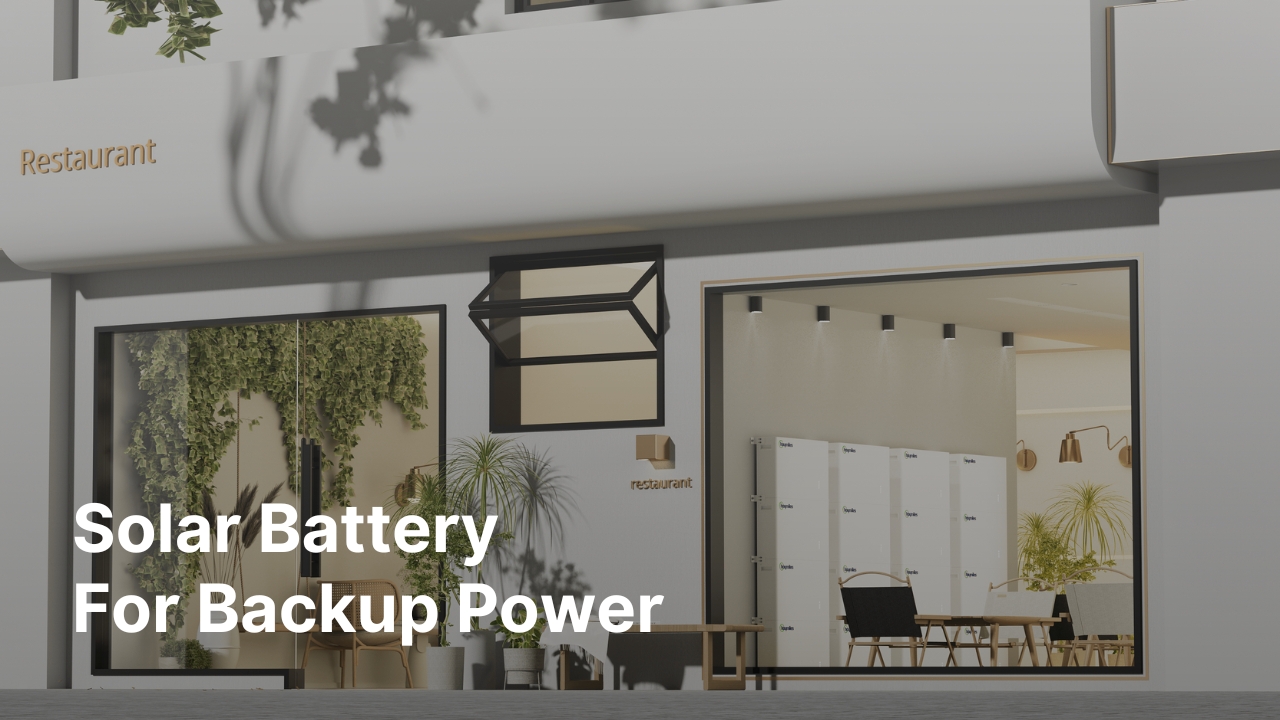
In Malaysia, where sunlight is abundant and grid stability can vary, adding a battery to an existing solar system offers:
- Protection against power outages
- Smarter use of solar in high-demand seasons
- Long-term cost savings, especially post-NEM Rakyat scheme
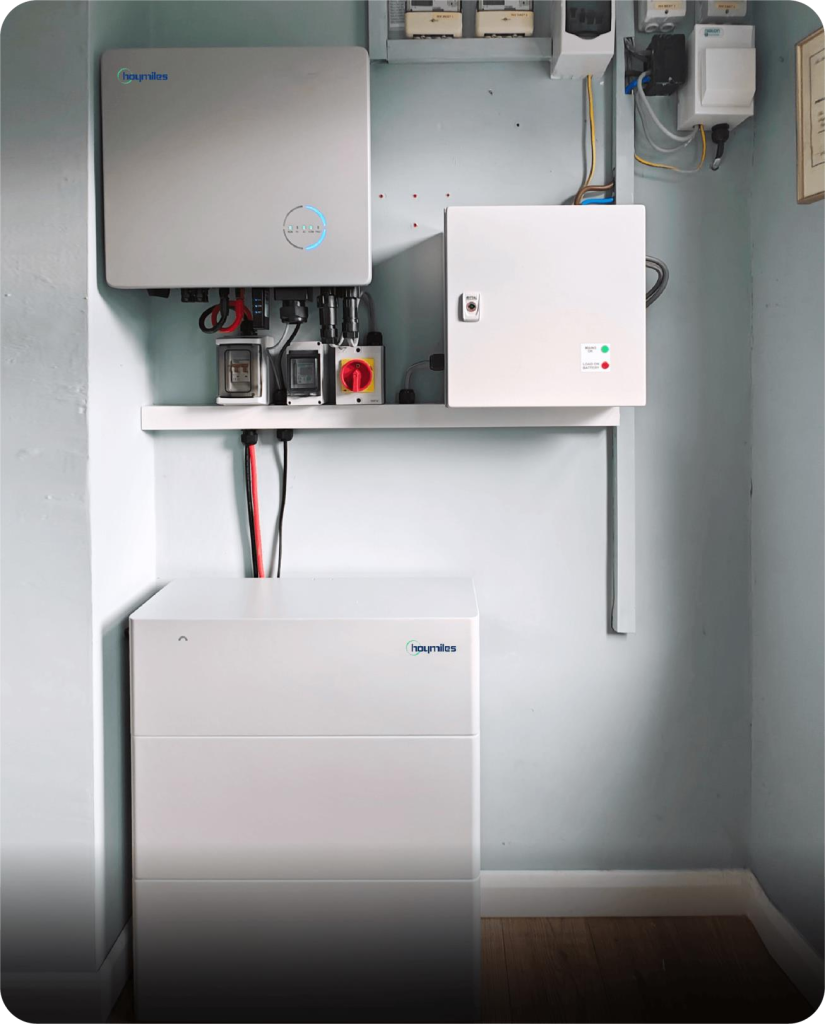
Adding solar battery storage to your setup gives you more than just a source of backup power. It helps you store excess solar energy for later use, protects your home during blackouts, and optimizes your energy use around pricing schemes.
In this guide, we’ll break down how you can add a solar battery storage system to your existing setup, what type of system works best, and how a complete home energy ecosystem can help to future-proof your home.

What Is a Solar Battery?
A solar battery stores the extra energy your solar panels generate during the day, so you can use it later — when the sun goes down, during peak pricing hours, or if the grid fails. Instead of sending all your surplus electricity back to the grid, you keep it for yourself.
All images and references are based on HoyMiles Products.
Seamless On-Grid and Off-Grid Solutions
When the grid goes down, you shouldn’t have to worry about losing power. With today’s more affordable battery storage options, it’s easier than ever for homeowners to pair solar with batteries for reliable, uninterrupted energy.
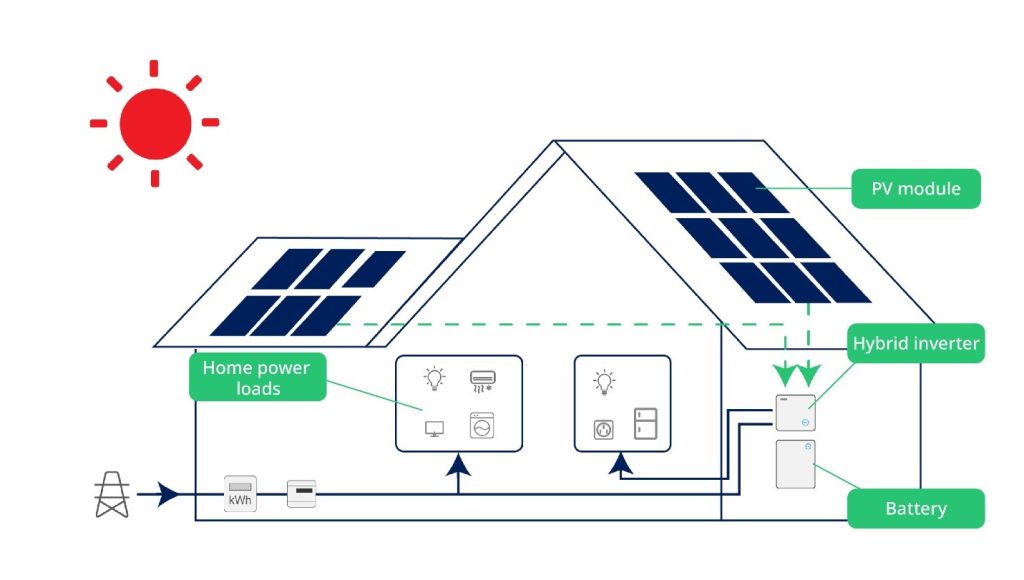
Key Components of a Solar + Storage System
Component
Purpose
| Solar panels (PV modules) |
| Capture sunlight and generate DC electricity |
| Microinverters / String inverter |
| Convert DC to AC electricity for household use |
| Hybrid inverter |
| Manages solar panels + battery, bi-directional power flow |
| Battery |
| Stores energy for night-time or outages |
| Monitoring system |
| Tracks energy generation, storage, and usage in real time |
| Optional add-ons |
| EV chargers, heat pumps, smart loads |
AC-Coupled vs DC-Coupled Battery Systems
When adding storage, the setup depends on the inverter you already have.
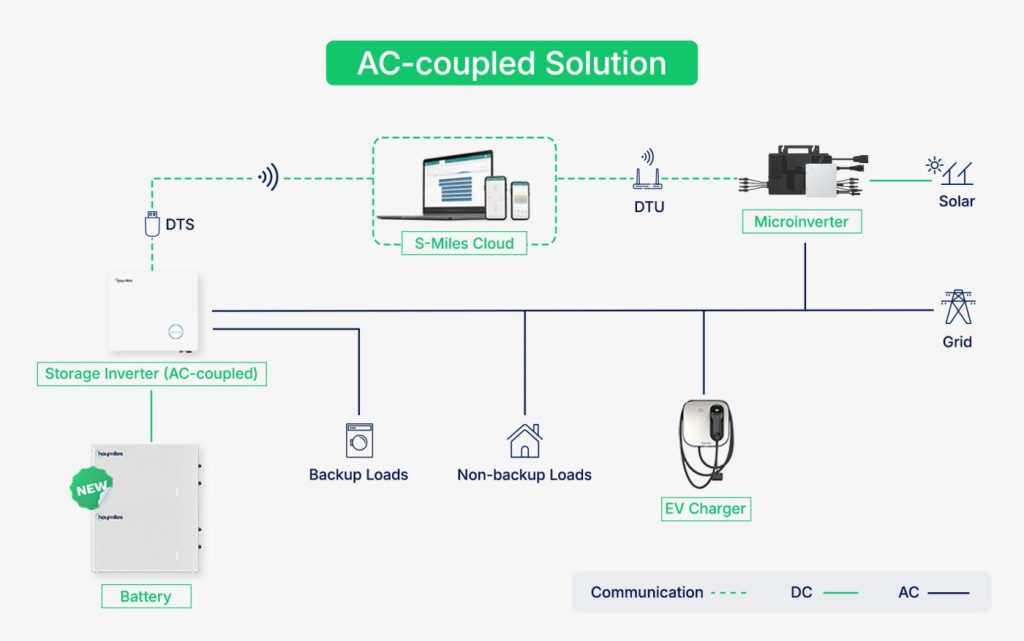
AC-Coupled System
Adds a separate inverter and battery to your existing setup
Simpler retrofit (no need to replace your solar inverter)
Flexible placement and easy upgrades later
Works well with systems that use microinverters
✅ Best for homeowners upgrading existing solar systems
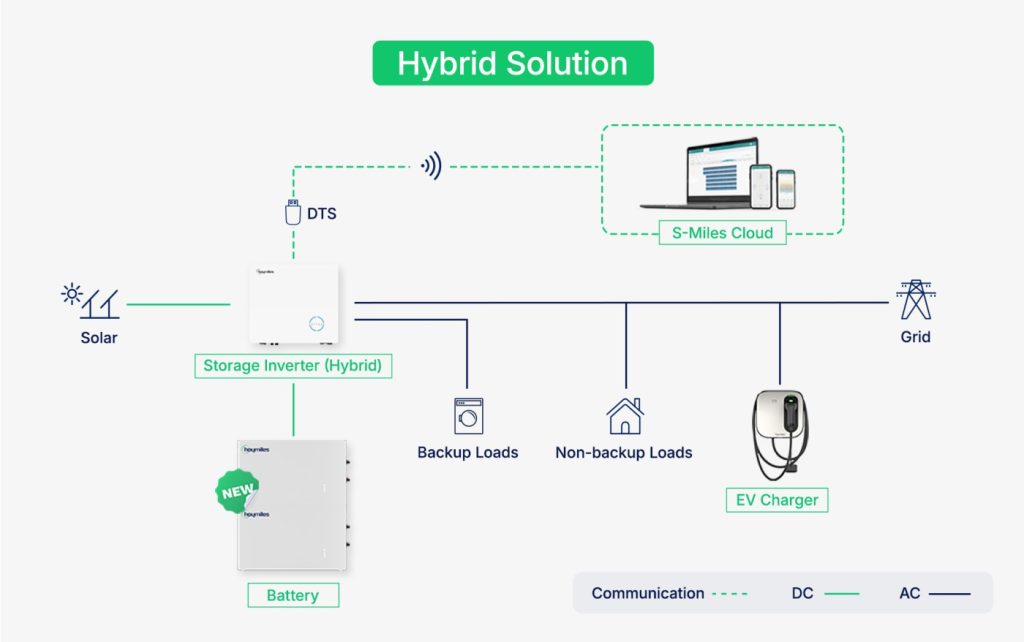
DC-Coupled (Hybrid Inverter) System
Uses one hybrid inverter for both solar panels and batteries
Fewer conversions = higher efficiency
Ideal for new installations or when replacing an old inverter
Offers advanced energy management features (Time-of-Use, Peak Shaving, Self-Consumption)
✅ Best for new setups or major system overhauls
Quick Comparison: AC vs DC Coupling
Feature |
|---|
AC-Coupled |
|---|
DC-Coupled (Hybrid) |
|---|
| Retrofit Friendly |
|---|
| Yes |
|---|
| Requires inverter replacement |
|---|
| Efficiency |
|---|
| Good |
|---|
| Higher |
|---|
| Flexibility |
|---|
| Easy to expand |
|---|
| Best for all-in-one setups |
|---|
Why Add a Battery to Your Solar System?
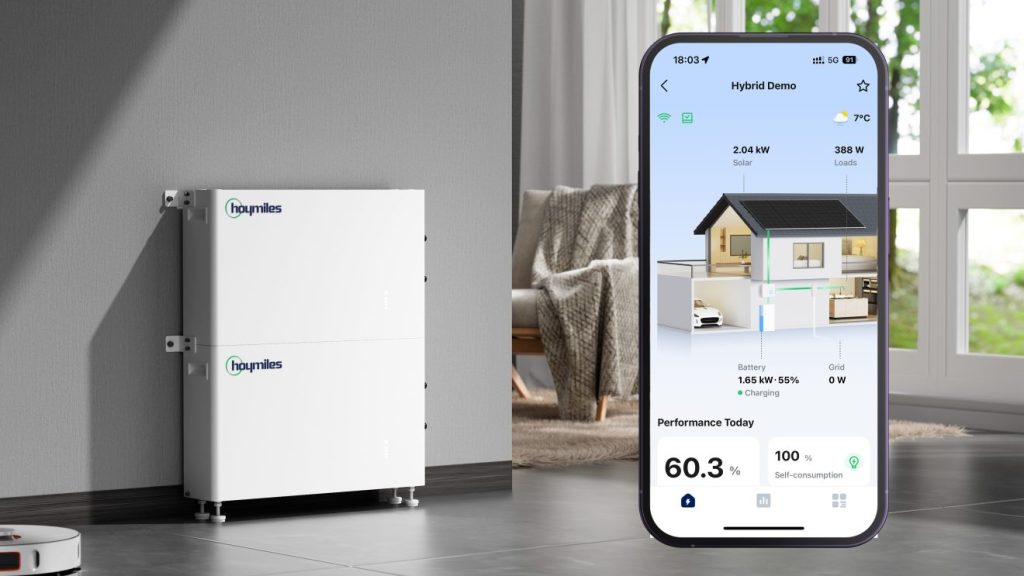
Blackout protection – Keep your lights, fridge, and Wi-Fi running even when the grid fails
Lower energy bills – Store solar when rates are low, use it when electricity is expensive
Whole-home backup – Power essential or even all appliances, depending on system size
Future-proofing – Be ready for rising tariffs, changing grid policies, and EV adoption
The Bottom Line
Adding battery storage to your solar system is more than an upgrade — it’s an investment in energy independence and long-term savings.
Already have a solar system? AC-coupled batteries are the simplest way to retrofit.
Planning a new system or inverter replacement? Go with a DC-coupled hybrid inverter for maximum efficiency and features.
With the right setup, you’ll enjoy lower bills, reliable backup power, long-term savings and smarter energy management — all powered by the sun.
Discover how Solartech can maximise your solar investment and provide peace of mind — no matter the weather or grid condition.
 Drop us a message to learn more or schedule a free consultation.
Follow this link to read more on the three powerful operation modes that hybrid inverters offer — and how they help you optimise energy use, save money, and stay prepared:
👉 Hybrid Inverter with Battery – A Simple Guide