Have you noticed that your TNB electricity bill is getting more expensive, even though your household electricity usage hasn’t changed much?
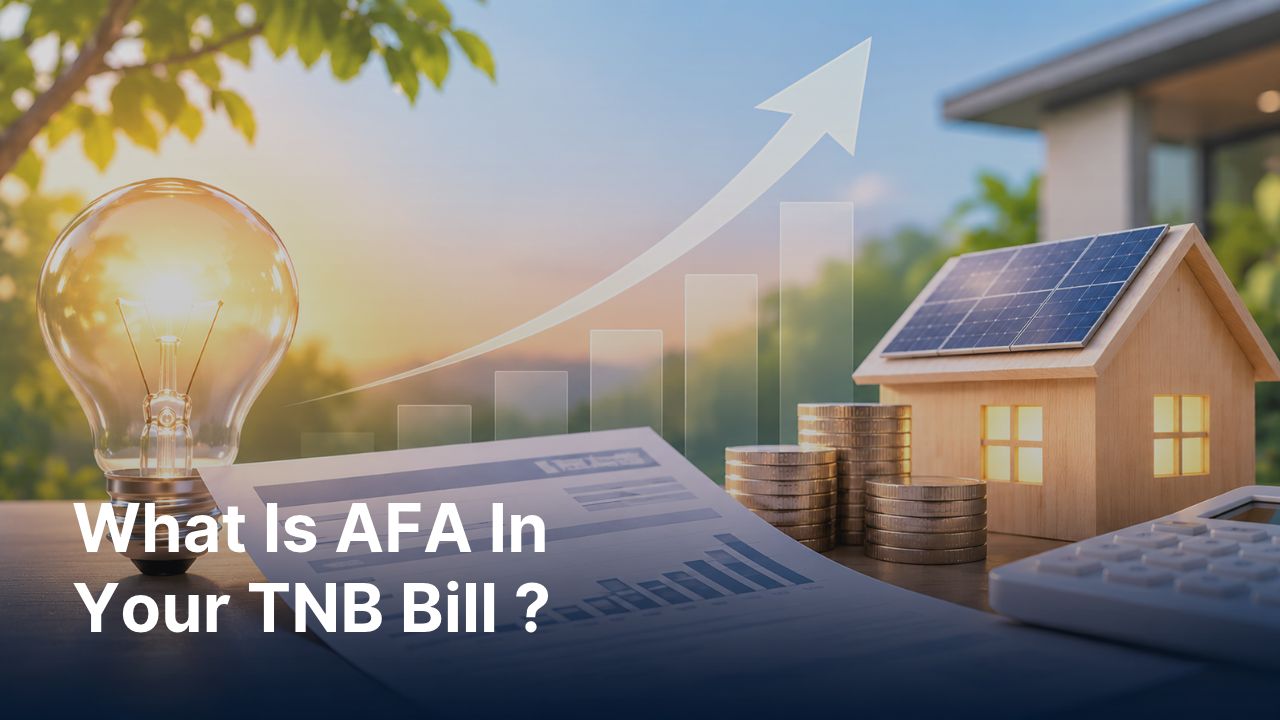
One possible reason is the Automatic Fuel Adjustment (AFA).
1. What Is Automatic Fuel Adjustment (AFA)?
The Automatic Fuel Adjustment (AFA) is a monthly mechanism introduced on 1 July 2025 by the Energy Commission (Suruhanjaya Tenaga).
Electricity generation depends heavily on fuels such as coal and natural gas. When their prices change, the cost of generating electricity also changes.
TNB AFA adjusts your electricity bill to reflect these changes.
There are two possible outcomes:
- AFA Rebate (Negative Rate): When generation costs are lower than expected, you receive a reduction in your electricity bill.
AFA Surcharge (Positive Rate): When generation costs are higher than expected, an additional charge is included in your bill.
In simple terms, AFA can either reduce or increase your electricity bill depending on the monthly rate.
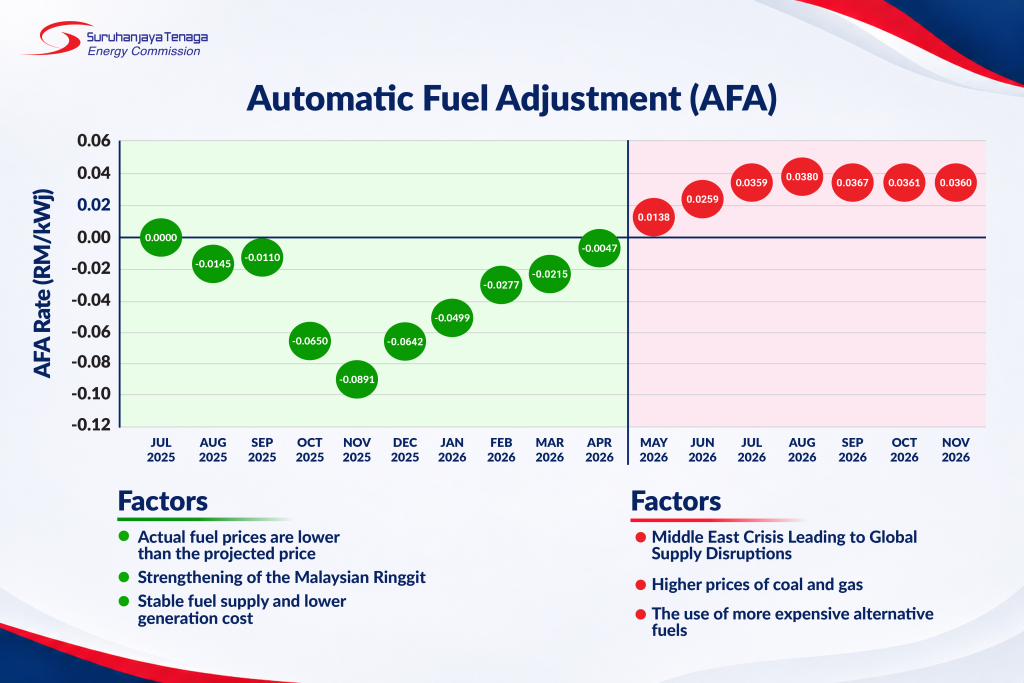
2. Why Has the TNB AFA Rate Increased?
AFA rates can change from month to month because of several factors, including:
Global coal and natural gas prices.
Fluctuations in foreign exchange rates.
Changes in electricity generation costs.
The use of alternative fuels to maintain a reliable electricity supply.
Check the latest rates on the Energy Commission’s official AFA page.
3. How Much More Could You Pay? Understanding the AFA Difference
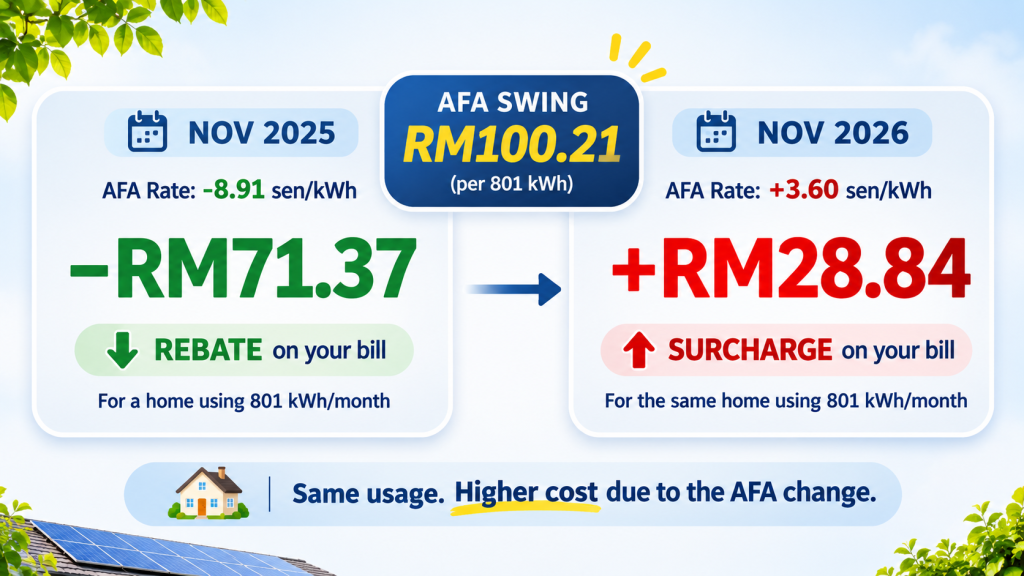
Let’s compare the November 2025 rebate with the November 2026 surcharge.
November 2025: -8.91 sen/kWh (rebate).
November 2026: +3.60 sen/kWh (surcharge).
That’s a difference of 12.51 sen per kWh.
4. The 800 kWh Exemption: What Happens If You Exceed the Limit?
To help households manage their electricity expenses, the government has temporarily increased the domestic electricity bill protection threshold from 600 kWh to 800 kWh per month.
From 1 September to 31 December 2026, domestic customers using 800 kWh or less per month are exempt from:
Automatic Fuel Adjustment (AFA).
RM10 retail charge.
8% Service Tax.
But what happens if your monthly electricity consumption exceeds 800 kWh?
Here’s a simple example:
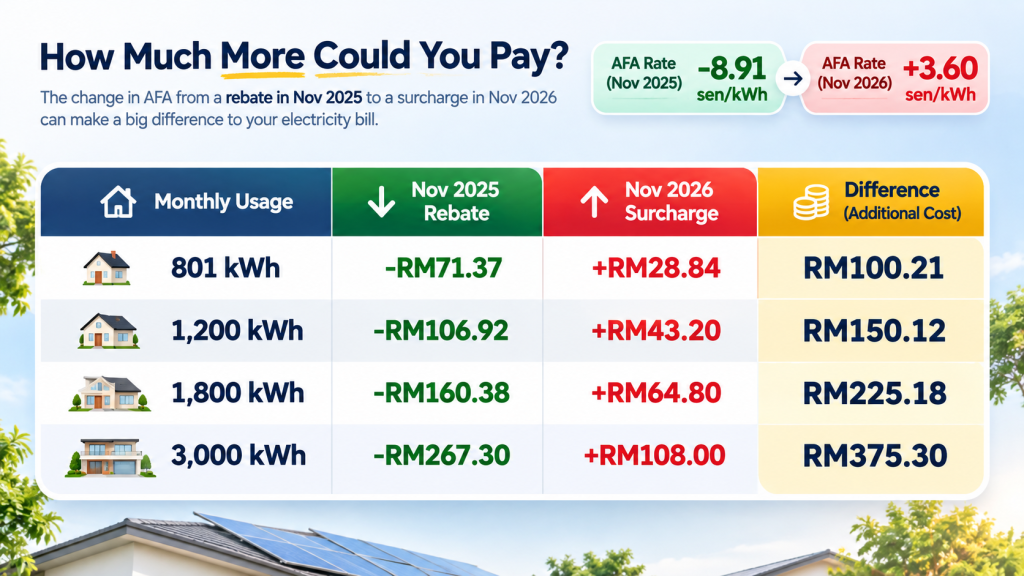
If your consumption reaches 801 kWh, you no longer qualify for the temporary exemption. The AFA charge will apply to your eligible billed consumption, rather than just the additional 1 kWh.
This means going slightly above the threshold could make a noticeable difference to your bill.
The 800 kWh protection is temporary and applies until 31 December 2026.
6. Take Control of Your Electricity Costs
Global fuel prices and electricity generation costs are beyond our control, but how much electricity we purchase from the grid is something we can manage.
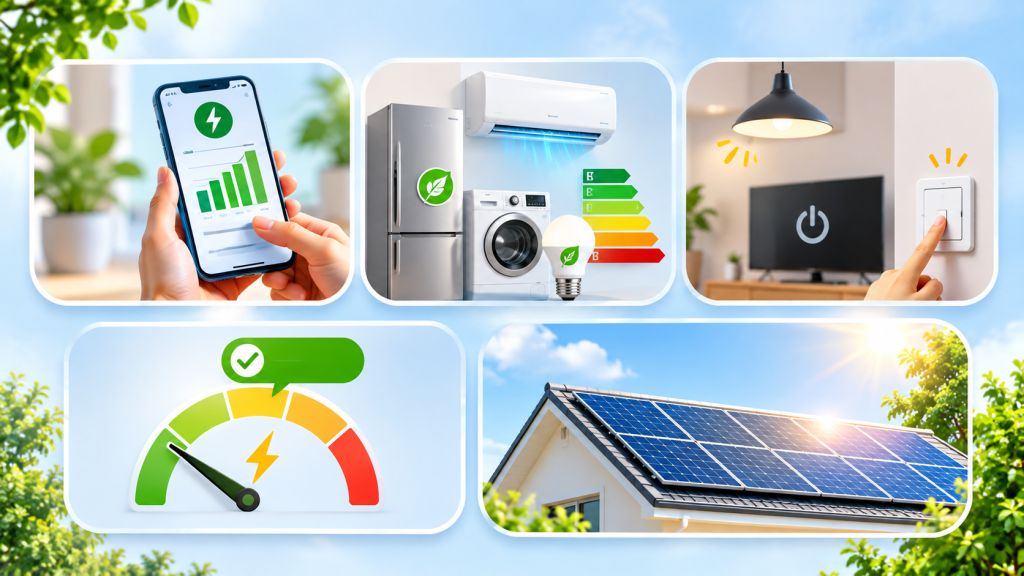
You can start by:
Monitoring your monthly electricity consumption.
Using energy-efficient appliances.
Avoiding unnecessary electricity usage.
Keeping your consumption within the applicable exemption threshold.
Exploring solar PV to generate your own electricity.
While TNB AFA rates may change every month, investing in a properly designed solar PV system can help reduce your household’s dependence on grid electricity over the long term.
5. Can Installing Solar Panels Help Reduce AFA Charges?
1. Use Your Own Solar Electricity During the Day
When sunlight is available, your solar panels generate electricity to power household appliances such as air conditioners, refrigerators, washing machines and other electrical equipment.
The more solar electricity you use directly, the less electricity you need to purchase from TNB.
This can help reduce your grid consumption and exposure to applicable AFA charges.
2. Reduce Your Dependence on Grid Electricity
A properly sized solar PV system can help reduce the amount of electricity your household draws from the grid.
Under applicable solar programmes, surplus electricity may also receive credits according to the programme’s billing arrangements.
By matching your solar system capacity to your household’s electricity usage, you can make better use of the electricity generated by your rooftop.
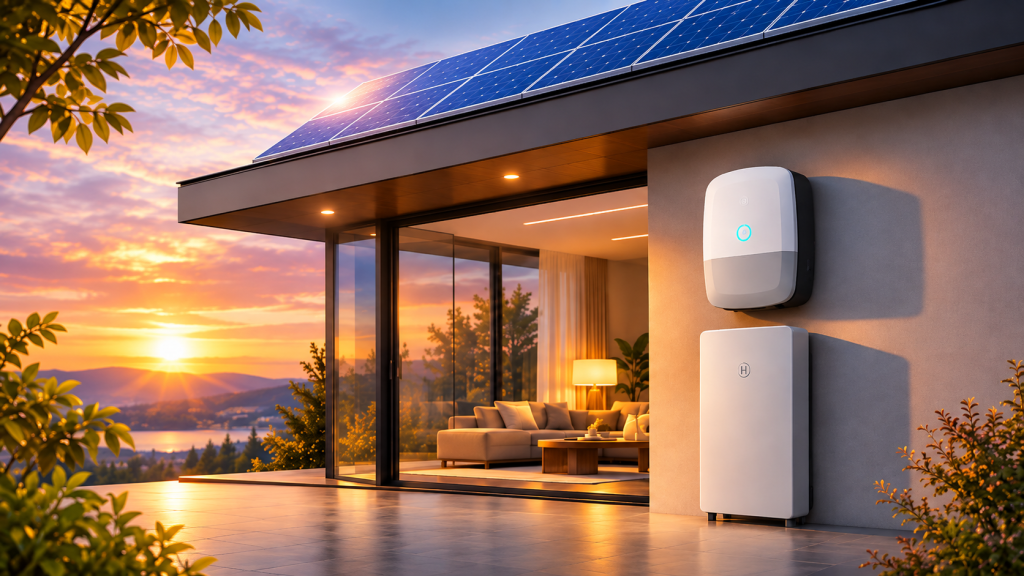
3. Add Battery Storage for Night-Time Usage
Solar panels generate electricity during the day, but most households also consume electricity at night.
Adding a Battery Energy Storage System (BESS) allows you to store excess solar electricity generated during the day and use it later.
For example:
Daytime: Solar panels generate electricity to power your home and charge the battery.
Evening: Your home uses stored battery electricity to power selected appliances.
Night-time: You can reduce your dependence on grid electricity by using the remaining stored energy.
A battery adds to the initial investment, so homeowners should consider their night-time consumption, battery capacity and expected savings before deciding whether it is worthwhile.
Thinking About Going Solar?
At Solartech, we help Malaysian homeowners explore suitable solar solutions based on their actual electricity consumption and energy needs.
Share your latest TNB electricity bill, or preferably 12 months of bills, with our team.
We’ll help assess your home’s solar potential, recommend a suitable system capacity and provide an estimated savings breakdown.