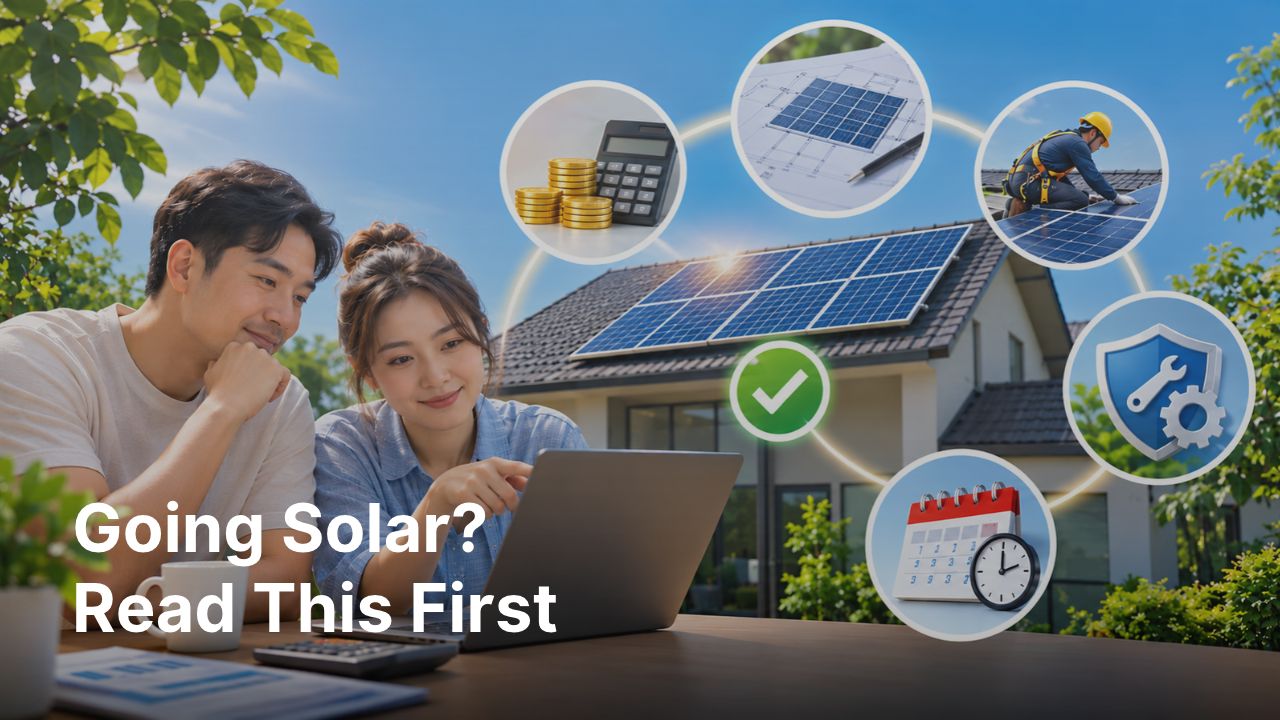
Thinking about home solar? Going solar can be a great way to reduce your electricity bills, generate your own clean energy and become less dependent on grid electricity.
However, a home solar PV system is a long-term investment. The decisions you make before installation can affect your savings, system performance and overall experience for many years.
After years of working in the solar industry, we’ve seen homeowners make similar mistakes that could have been avoided with better planning and the right questions.
Before you sign a contract or commit to a solar package, here are 5 important things every homeowner should consider.
1. Don’t Choose a Solar Installer Based on Price Alone
Getting several quotations is a good way to compare prices, but choosing the cheapest package isn’t necessarily the smartest decision.
A solar PV system is designed to operate for 20 to 30 years. The quality of its components, installation workmanship and after-sales support can make a significant difference to its long-term performance.
An unusually low quotation may involve:
Lower-tier solar panels or inverters.
Limited product or workmanship warranties.
Inexperienced or subcontracted installation teams.
Hidden costs for additional electrical or roofing work.
Limited after-sales support once the installation is completed.
Instead of comparing only the total price, look at the overall value of the package.
Check the brands and models of the solar panels and inverters, warranty coverage, installation scope and the company’s track record.
Why choose an experienced company?
Solartech has been in business for over 46 years in the solar thermal industry. We believe in delivering quality products and building lasting relationships with our customers.
When investing in solar, look beyond the initial price and consider who will be supporting your system throughout its lifespan.
2. Don’t Skip Site Assessment and System Design
A home solar system should be designed around your household’s actual needs, not simply based on a standard package or the number of panels an installer wants to sell.
A properly designed system considers several factors:
1. Your electricity consumption
Your previous 6 to 12 months of TNB electricity bills can help determine your average monthly consumption and identify suitable system capacity.
2. Your roof condition and available space
The roof’s orientation, available installation area, shading, structural condition and roof material can affect how many panels can be installed and how much electricity they can generate.
3. Your daily electricity usage
Do you use more electricity during the day or at night? Households with higher daytime consumption may be able to use more of their solar generation directly, while households with higher evening consumption may have different requirements.
4. Your future energy needs
Are you planning to purchase an electric vehicle, add more air conditioners or install additional electrical appliances? These changes could affect your future electricity consumption.
Questions to Ask About Your Solar System
Before accepting a proposal, ask your installer:
What are the solar panel and inverter brands and models?
What is the proposed system capacity?
Why is this system size suitable for my household?
What assumptions are used in the generation and savings estimates?
How will I monitor my system’s performance?
What approvals and documentation are required before the system can operate?
A good solar proposal should explain not only what you are buying, but also why the proposed system is suitable for your home.
3. Understand the Installation Scope
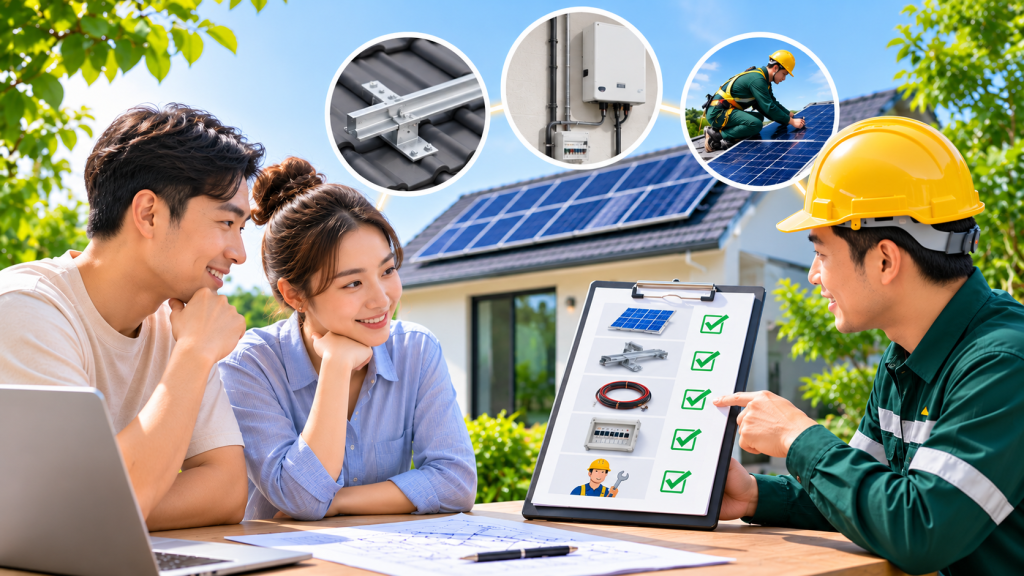
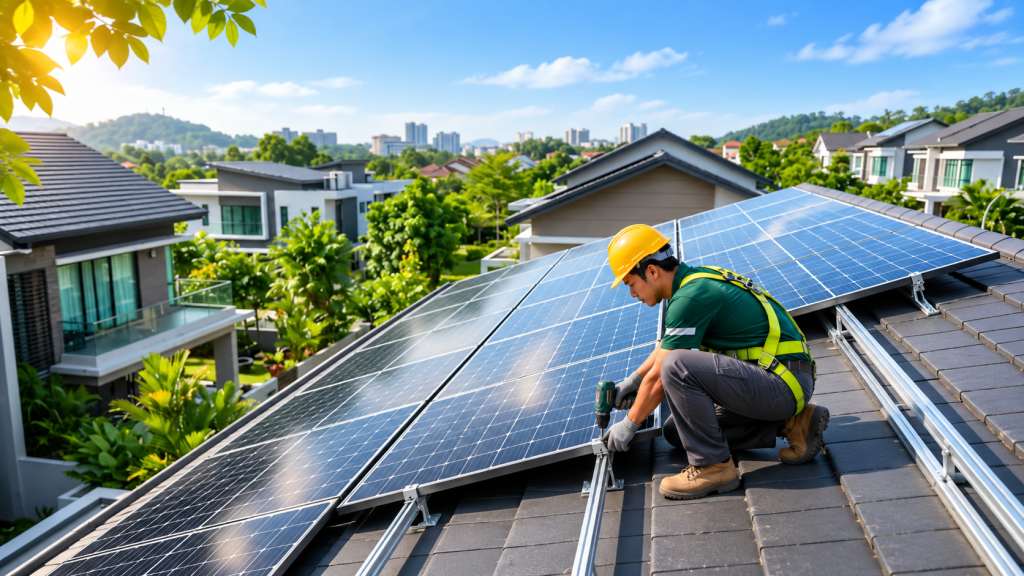
A home solar installation involves more than mounting panels on your roof. It requires proper electrical planning, cabling, mounting structures, inverter installation, safety checks and coordination with the relevant authorities and utility provider.
One common mistake homeowners make is assuming that everything is included in the quoted price.
Before signing, understand exactly what the installation package covers.
Questions to Ask About Installation
What does the quoted price include?
Are mounting structures, cabling, wiring and electrical protection included?
Are there additional charges for roof access, scaffolding or electrical upgrades?
Does my distribution board require any modifications?
Who handles the Solar ATAP application and TNB-related documentation?
What is the estimated timeline from site assessment to installation and commissioning?
Every property is different. Some homes may require additional electrical work, longer cable routes or special roof access arrangements.
A proper site assessment helps identify these requirements early, reducing the likelihood of unexpected costs or installation delays.
4. Don’t Overlook Warranties and After-Sales Support
Your relationship with your solar installer shouldn’t end once the panels are installed.
Solar PV systems are long-term investments, and homeowners need to know who to contact when something goes wrong.
For example, what happens if your inverter stops working in year four? What if your monitoring application suddenly shows no generation?
Before committing to an installer, understand the warranty coverage and after-sales support available.
Questions to Ask About Warranties and Maintenance
How long is the solar panel product warranty?
What is the solar panel performance warranty?
How long is the inverter warranty?
Is there a separate installation workmanship warranty?
What happens if a component fails?
Is maintenance included or offered as an optional service?
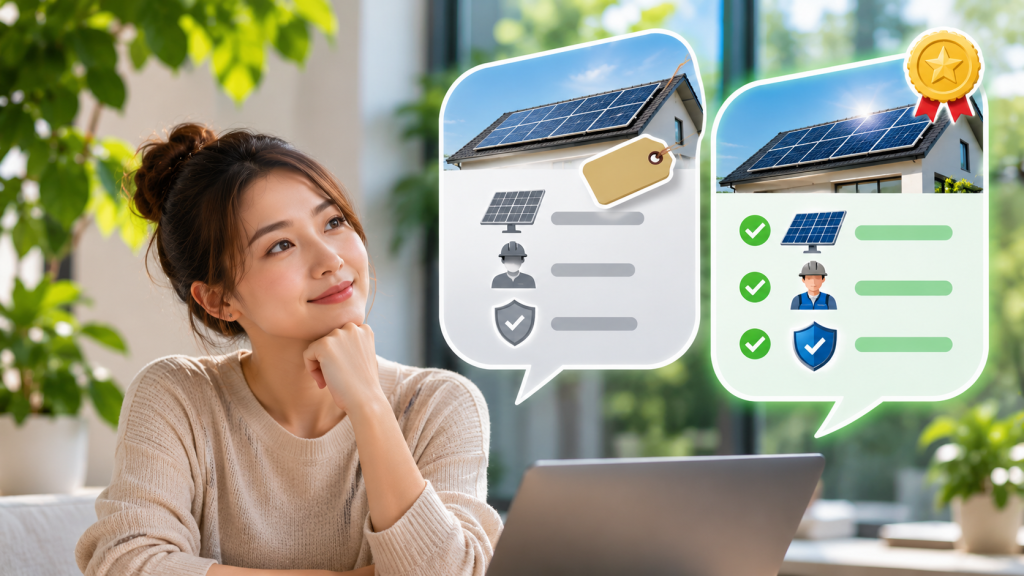
Remember that product warranties and workmanship warranties are not the same. A manufacturer’s warranty generally covers specific product defects, while workmanship coverage relates to the quality of the installation.
Also ask about system monitoring and periodic maintenance. Even though solar PV systems generally require relatively little maintenance, keeping an eye on performance helps identify potential issues early.
Choose a company that is prepared to support you long after the installation is completed.
5. Don’t Overlook Your Return on Investment and Available Incentives
Solar PV is an investment, so understanding the financial benefits is just as important as understanding the equipment.
Before installing, ask for a realistic breakdown of your expected electricity savings and estimated payback period.
Your actual savings will depend on several factors, including:
Your monthly electricity consumption.
The size and generation capacity of your solar system.
How much solar electricity you consume directly.
How much surplus electricity is exported to the grid.
The applicable electricity tariff and export credit mechanism.
Your system’s installation cost and financing arrangement.
5. Waiting Too Long
Eligible Malaysian homeowners may also benefit from the government’s SuRIA Home incentive. The rebate up to RM3,000 is set to end by 31 December 2026 or once the quota of 250 megawatts (MW) is fully utilised, whichever comes first. Every year you wait is a year of both foregone savings and maybe lesser incentive in the future. Most homeowners who’ve made the switch wish they’d done it sooner.
At Solartech, we believe every homeowner deserves a solar solution designed around their needs.
With our experience in the solar industry and commitment to quality products, we’re here to help you understand your options and make an informed decision.